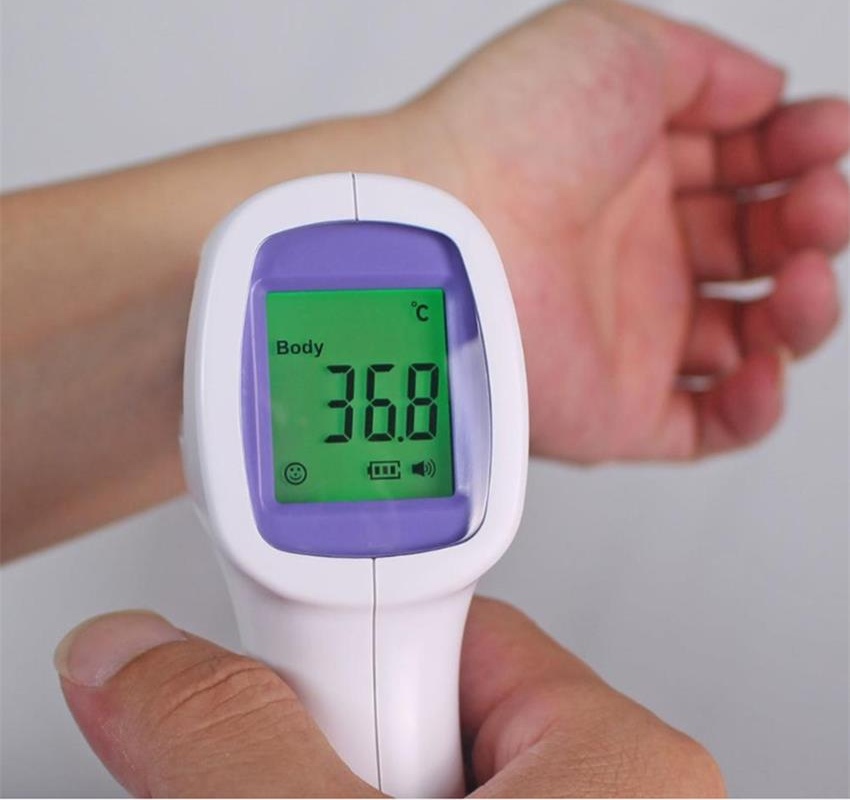
Infrared Thermometer
An infrared thermometer is a thermometer that infers the temperature from being measured from a portion of thermal radiation, sometimes called black body radiation, emitted by an object. They are sometimes called laser thermometers because lasers are used to help aim thermometers, or non-contact thermometers or temperature guns, to describe a device's ability to measure temperature from a distance. By knowing the infrared energy emitted by an object and its emissivity, the temperature of an object can often be determined within a certain range of its actual temperature. Infrared thermometers are a subset of devices called "thermal radiation thermometers."
Sometimes, especially near ambient temperature, readings can be erroneous due to reflections of radiation from a hotter object (even a person holding the instrument) rather than the object being measured, as well as erroneously assumed emissivity.The design consists primarily of a lens to focus infrared thermal radiation onto a detector, which converts the radiant power into an electrical signal that can be displayed in temperature units after compensating for ambient temperature. This allows the temperature to be measured from a distance without touching the object to be measured. Non-contact infrared thermometers can be used to measure temperature in situations where thermocouples or other probe-type sensors cannot be used or cannot produce accurate data for various reasons
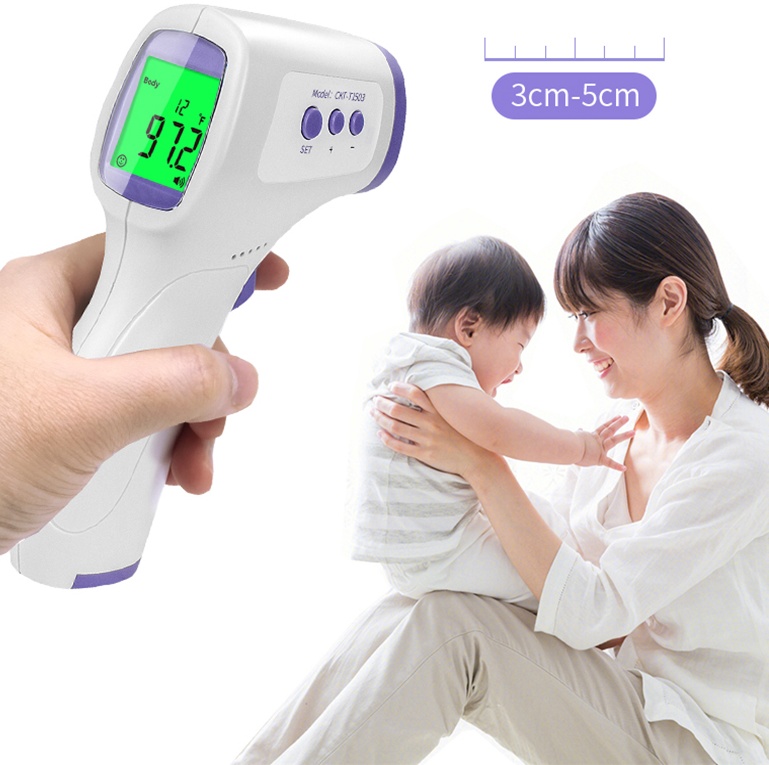
Example of use
Some typical situations are when the object being measured is moving; the object is surrounded by an electromagnetic field, such as induction heating; the object is contained in a vacuum or other controlled atmosphere; or in applications that require fast response, an accurate surface temperature or high object temperature is required At the recommended point of use for the contact sensor, or contact with the sensor can damage the object or the sensor, or introduce significant temperature gradients across the surface of the object.Infrared thermometers can be used to provide a variety of temperature monitoring functions. Some examples provided include cloud detection for remote telescope operation, checking the temperature and hot spots of mechanical or electrical equipment, measuring the temperature of a hospital patient without touching the patient, checking heater or oven temperature, for calibration and control, Check for hot spots in firefighting, monitor materials involved in heating or cooling processes, and measure the temperature of volcanoes. During epidemics of fever-causing diseases such as SARS coronavirus and Ebola virus disease, infrared thermometers have been used to check arriving passengers for fever without causing harmful transmission among subjects.
In 2020, when the COVID-19 pandemic swept the world, infrared thermometers were used to take people's temperatures and deny them access to potential sites of transmission if they showed signs of fever. Public health agencies such as the FDA publish rules in the United States to guarantee accuracy and consistency in infrared thermometers.
There are a variety of infrared temperature sensing devices available for portable and handheld as well as fixed installations.
Infrared Pyrometer
The most common infrared thermometers are spot infrared thermometers or infrared thermometers, which measure the temperature at a point on a surface (actually a relatively small area determined by the D:S ratio). These typically project a visible red dot in the center of the area being measured to identify the point being measured, but do not participate in the measurement. The actual angular area that is measured varies from instrument to instrument and is not limited to visible light spots.